
Redefining Your Daily Drive
For many commuters and automotive enthusiasts, the vehicle is more than just a mode of transportation; it is a sanctuary, a mobile office, and, crucially, a primary listening room. Yet, despite advancements in vehicle technology, automotive manufacturers frequently compromise on one critical area: the sound system.
The unfortunate reality is that most factory-installed audio systems are engineered based on budgetary constraints rather than acoustic performance. They often utilize low-cost components designed merely to produce sound, rather than an immersive musical experience. The result is often muddy, distorted audio that lacks clarity, depth, and emotional impact.
If you find yourself uninspired by your current listening experience, a professional car audio upgrade is the solution. This guide serves as a comprehensive resource for understanding the various tiers of aftermarket car audio. Whether you are seeking a basic improvement over stock components or chasing the pinnacle of high-fidelity car sound, understanding the upgrade path is essential to making informed decisions that align with your goals and budget.
Phase 1: Understanding the Limitations of OEM Audio
Before diving into upgrades, it is necessary to understand why Original Equipment Manufacturer (OEM) systems often underperform.
Modern vehicles are complex electronic ecosystems. To maintain competitive pricing, manufacturers often utilize inexpensive paper-cone speakers with small magnets and minimal power handling capabilities. Furthermore, the head unit (the radio in the dashboard) is typically designed with very low power output, which introduces significant distortion at higher volumes.
Finally, the automobile itself is an inherently hostile acoustic environment. It is filled with reflective surfaces like glass and plastic, alongside absorptive materials like carpet and upholstery, all while competing with road noise and engine vibration. A successful aftermarket car audio system does not just add better parts; it strategically overcomes these environmental challenges.
Phase 2: The Foundation – Essential Upgrades for Immediate Impact
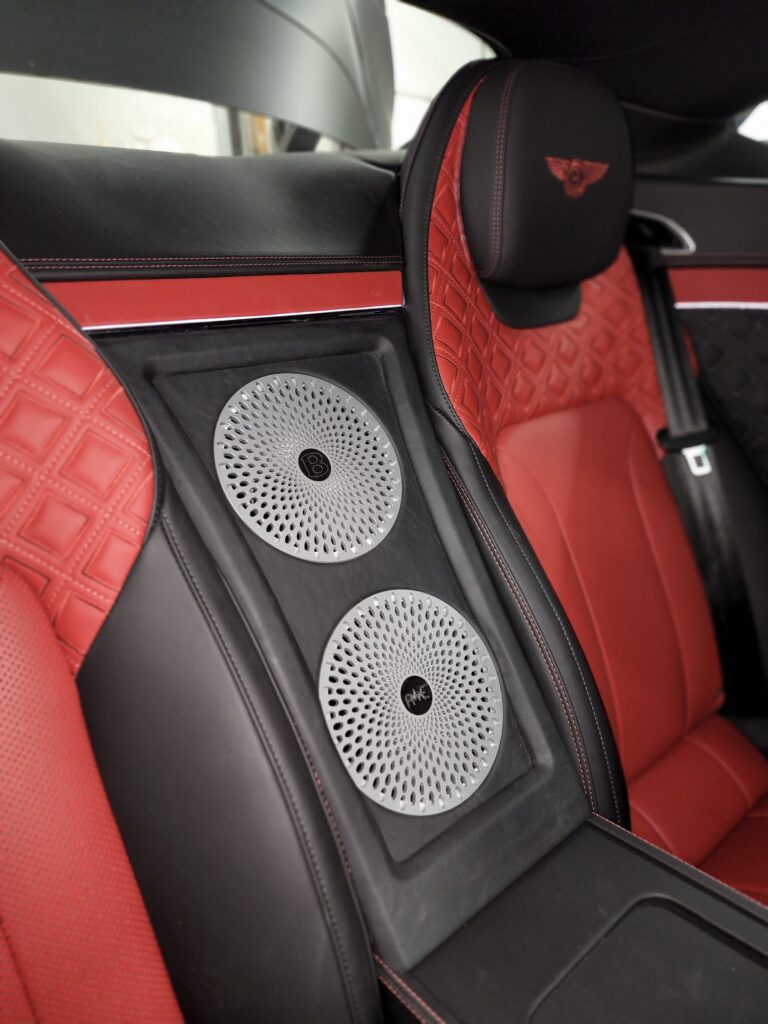
The initial stage of upgrading focuses on replacing the weakest links in the audio chain. These upgrades provide the most significant audible improvement for a moderate investment.
1. Upgrading the Speakers
The most effective first step is replacing the factory door and dash speakers. Aftermarket speakers are constructed with superior materials—such as polypropylene, Kevlar, or silk—offering greater durability and vastly improved sound reproduction.
When searching for the best car speakers for your needs, you will generally encounter two types:
- Coaxial Speakers: These are “all-in-one” units where the tweeter (for high frequencies) is mounted directly in front of the woofer (for mid-range frequencies). They are excellent for straightforward, drop-in replacements in factory locations.
- Component Systems: This configuration separates the tweeter and the woofer into distinct drivers, utilizing an external crossover network to direct frequencies appropriately. This allows for optimal placement of the tweeter (usually higher up on the dash or pillar) to raise the soundstage and improve imaging.
2. Acoustic Treatment (Sound Deadening)
An often-overlooked but critical component of a quality installation is sound dampening. Applying specialized acoustic material inside door panels reduces metal resonance and road noise. This treatment effectively turns the car door into a much better speaker cabinet, resulting in tighter mid-bass response and a dramatically quieter cabin floor for your music.
Phase 3: Power and Depth – The Intermediate Tier
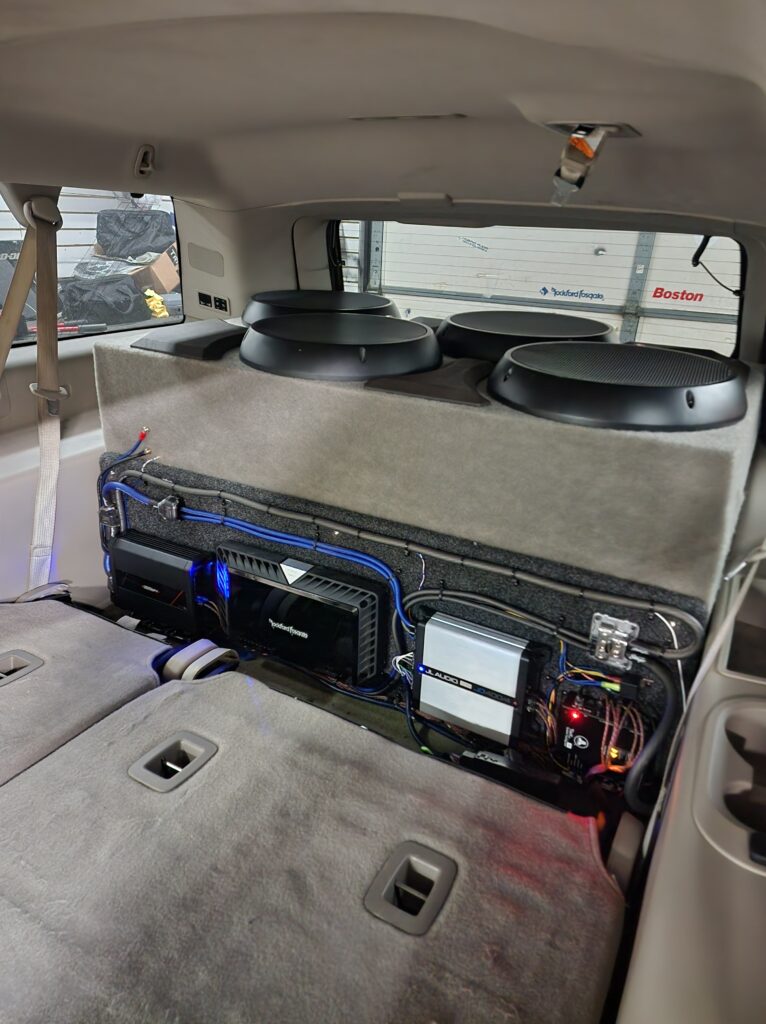
Once high-quality speakers are installed, the limitations of the factory power source become apparent. The intermediate tier focuses on supplying clean power and filling out the frequency spectrum.
1. Adding Amplifiers
Factory radios often produce only 10-15 watts of power per channel, which is insufficient for driving high-quality aftermarket speakers effectively. When pushed, these radios send a clipped, distorted signal that can damage new speakers.
A dedicated aftermarket amplifier provides clean, high-current power. This is not merely about achieving louder volume; it is about “headroom.” An amplified system plays music effortlessly at normal listening volumes with greater dynamics, detail, and clarity.
2. Integrating Subwoofers
A common misconception is that subwoofers are solely for creating earth-shaking bass meant to disturb the peace. In reality, a properly integrated subwoofer is essential for a full-range musical experience.
Most door speakers cannot accurately reproduce frequencies below 80Hz. A subwoofer handles these low frequencies, adding warmth, depth, and impact to the music—from the kick drum in a rock track to the lowest octave of a piano. Subwoofer solutions range from compact, under-seat powered enclosures to custom-fabricated truck boxes, catering to desired bass levels and available cargo space.
Phase 4: The Audiophile Experience – High-Fidelity Precision
The upper echelon of car audio aims to replicate the experience of a high-end home listening room within the vehicle. This stage requires precise control over the acoustic environment.
The Digital Signal Processor (DSP)
The DSP is the brain of a high-fidelity car sound system. Because a driver sits off-center in a car (closer to the left speakers than the right), the sound from the left reaches the ears microseconds before the sound from the right, destroying the stereo image.
A professional tuner uses a DSP to apply:
- Time Alignment: Delaying the closest speakers so sound from all drivers arrives at the listener’s ears simultaneously, creating a centered “soundstage” on the dashboard.
- Parametric Equalization: Precise adjustments to flatten frequency response peaks and valleys caused by the car’s interior acoustics.
- Active Crossovers: Sending exact frequency ranges to specific speakers for maximum efficiency and clarity.
The Critical Importance of Professional Installation
While the components are vital, the execution of the installation is paramount. Modern vehicles are highly integrated, involving complex data-bus systems, active noise cancellation microphones, and safety sensors. Incorrect wiring or improper integration can lead to vehicle malfunction, voided warranties, or safety hazards.
For residents in Central Indiana, seeking professional car stereo installation in Indianapolis ensures that your equipment performs to its specifications without compromising vehicle integrity. A professional installer possesses the necessary tools for safe disassembly, the expertise to integrate with modern infotainment systems smoothly, and the acoustic knowledge to tune the system for the specific vehicle environment.