
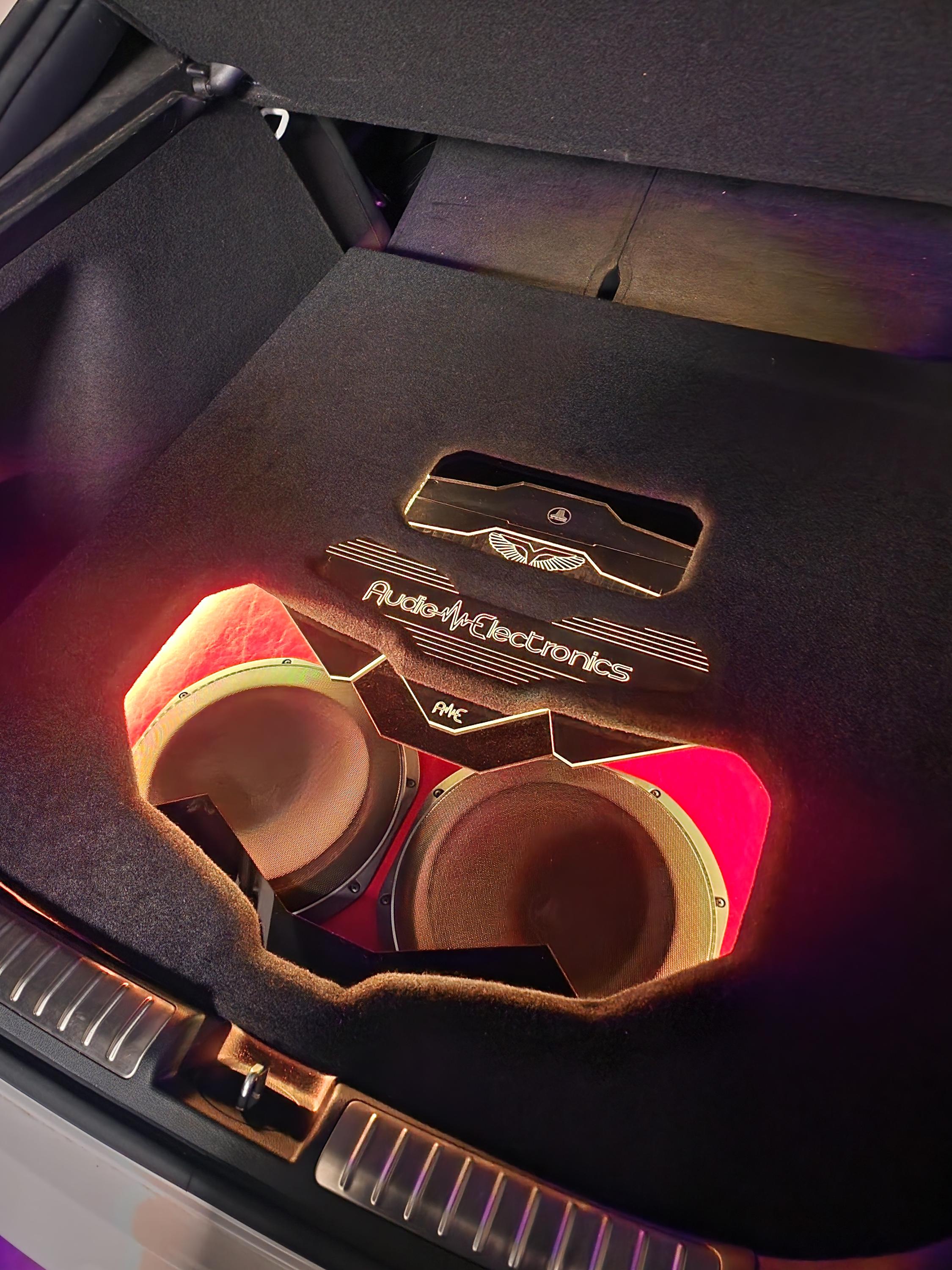
Most people think louder bass means better bass. But if you want deep bass car audio Indy fans respect, it’s not that simple. Choosing between a sealed vs ported subwoofer box means deciding if you want tight, punchy hits or booming, room-shaking lows. Knowing which fits your style can make all the difference for your next custom subwoofer box Indianapolis build.
Understanding the Basics: What Makes Each Box Different?
So you’re ready to upgrade your sound system, but you’re stuck on one big question: sealed or ported? Let me break it down for you in a way that actually makes sense.
What’s a Sealed Subwoofer Box?
Think of a sealed box like a completely closed container. Your subwoofer sits inside, and there’s no opening or hole for air to escape. It’s simple, compact, and gets straight to the point. The air inside acts like a spring, controlling how your sub moves. This gives you that tight, controlled bass that hits hard and fast.
When you’re listening to tracks with quick bass notes, a sealed box keeps up without any lag. Each beat is crisp and clean. You’ll hear every note exactly as the artist intended. That’s why audiophiles and people who care about accuracy tend to love sealed boxes.
What’s a Ported Subwoofer Box?
A ported box (sometimes called a vented box) has an opening or tube that lets air flow in and out. This port is tuned to a specific frequency, which means it’s designed to boost certain bass notes. The result? Louder, deeper bass that fills your entire car.
If you want bass that you can feel in your chest, a ported box delivers. The port works with your subwoofer to move more air, creating those earth-shaking lows that make your mirrors shake and your neighbors take notice.
Sealed vs Ported Subwoofer: The Real Differences
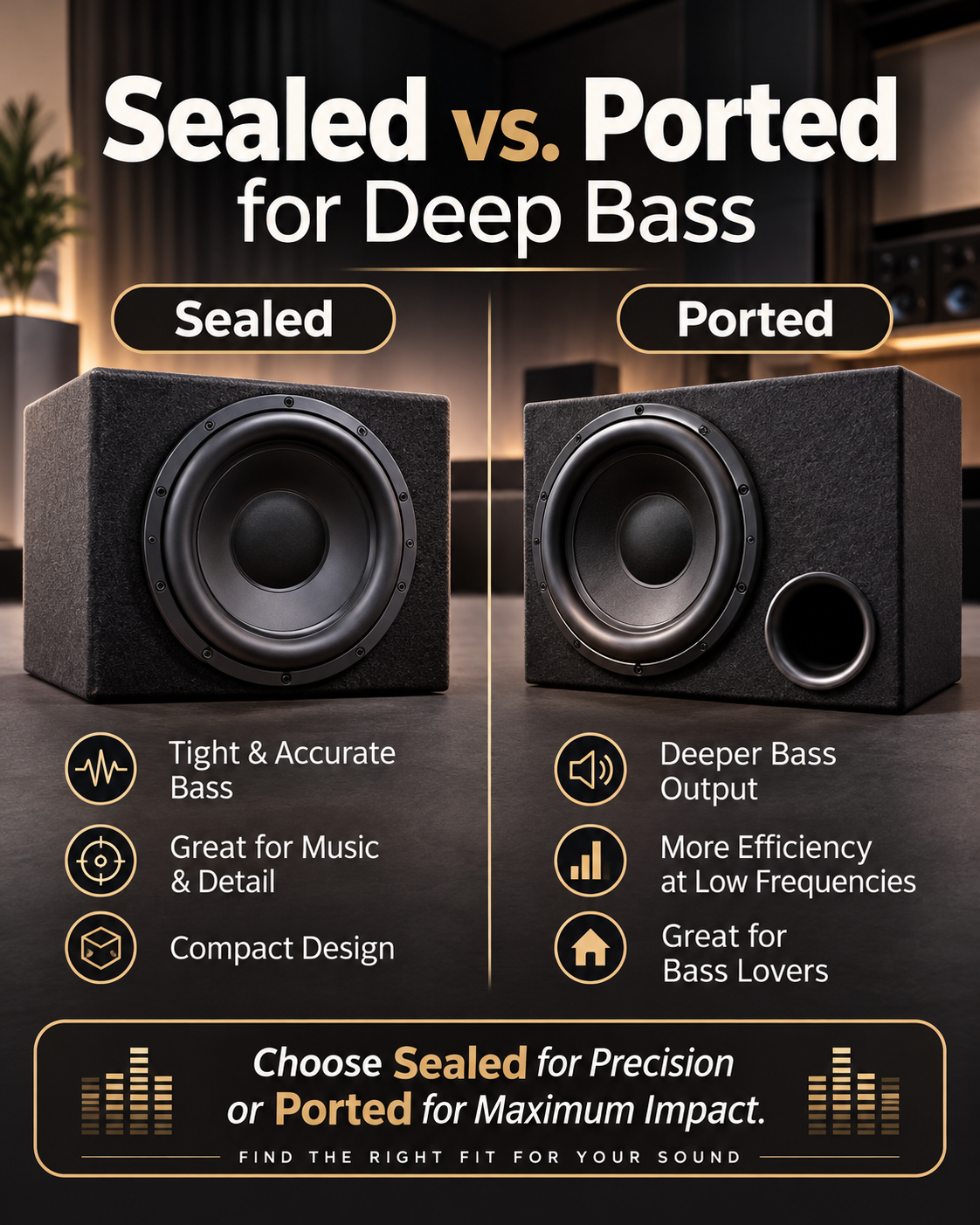
Let’s get into what really sets these two apart. And I’m not just talking about the box design. I’m talking about how they actually sound in your ride.
Sound Quality and Accuracy
Here’s where sealed boxes shine. Because the enclosure is airtight, your sub has total control over the sound. You get bass that’s accurate and balanced. Hip-hop tracks with fast-paced beats sound clean. Rock songs with bass guitars come through clear. Nothing gets muddy or bloated.
Ported boxes trade a bit of that accuracy for volume and depth. The bass might not be as tight, but it goes lower and hits harder. For EDM and trap music where you want those sub-bass frequencies to rattle your trunk, ported is often the way to go.
Volume and Output
Want to be heard from three blocks away? A ported box is your friend. The port design boosts the output, especially at the tuned frequency. You’re getting more bang for your buck in terms of sheer volume. With the same power going to your amp, a ported box will typically sound louder than a sealed one.
Sealed boxes are quieter by comparison, but don’t let that fool you. They still hit hard. They’re just more focused and controlled. If you’re in a smaller car or you don’t need to shake the whole parking lot, sealed gives you plenty of punch without going overboard.
Size and Space Requirements
Got a small trunk or limited space? Sealed boxes are usually more compact. Since they don’t need room for a port, you can build them smaller and tuck them into tighter spots. This is perfect if you still want to haul groceries or camping gear.
Ported boxes need more space. The port itself takes up room, and the overall box size is typically larger. If you’re serious about getting the best subwoofer enclosure for maximum output and you’ve got the trunk space to spare, the extra size is worth it.
Power Handling
Sealed boxes are easier on your subwoofer. The air cushion inside protects the cone from overextending. You can push them pretty hard without worrying about damaging your sub. They’re forgiving and reliable.
Ported boxes let your sub move more freely, especially near the tuned frequency. This means you need to be more careful with your settings. Push it too hard below the tuned frequency, and you risk damaging your sub. But when you dial it in right, you get incredible output.
Which One Fits Your Music Style?
Your music taste should play a huge role in your decision. Let’s talk about what works best for different genres.
Hip-Hop and Rap
This one depends on the style. Old-school hip-hop with punchy basslines? Sealed gives you that tight, rhythmic thump. Modern trap and bass-heavy rap? Ported lets those 808s rumble like they should.
If you’re listening to artists who layer deep sub-bass under their beats, ported is going to give you that full experience. You’ll feel every low-end hit.
EDM and Electronic Music
EDM fans, this is your territory for ported boxes. Those long, sustained bass drops need room to breathe. Ported boxes handle the super-low frequencies that make festival sound systems so impressive. When that bass drops, you want to feel it in your bones, right? That’s what a ported box does.
Rock and Metal
For rock, metal, and anything with live instruments, sealed is often the better choice. Bass guitars and kick drums need that tight, fast response. You want to hear the definition in each note, not just feel a wall of bass. Sealed boxes keep everything clean and musical.
Everything Else
Listen to a mix of everything? You might want to consider a sealed box for its versatility. It handles most genres well without favoring one over another. Or, if you’re willing to invest in custom trunk fabrication Indiana shops can provide, you could even build a system with both types for different situations.
Building Your Custom Subwoofer Box Indianapolis
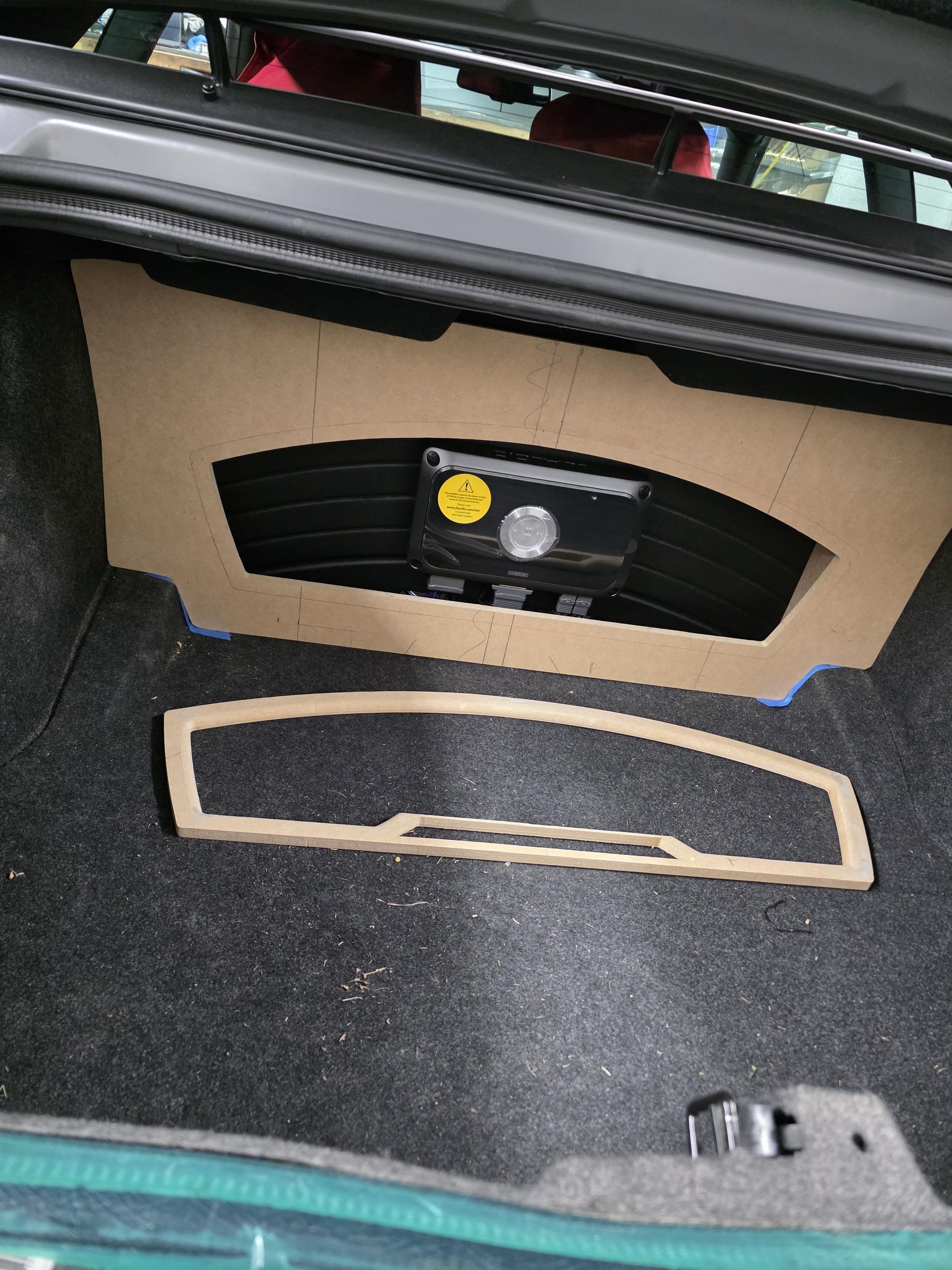
Now that you know the difference, let’s talk about actually getting one built. You’ve got options.
Prefab vs. Custom
You can buy prefab boxes online or at car audio shops. They’re affordable and ready to go. But here’s the thing: they’re built for generic applications. Your trunk isn’t generic. Every vehicle has different space constraints and acoustic properties.
A custom subwoofer box Indianapolis builders create is designed specifically for your car and your sub. It fits perfectly, looks clean, and performs better because it’s tuned for your exact setup. Yeah, it costs more upfront, but the difference in sound quality and fit is night and day.
What Goes Into a Custom Build
When you work with a shop on a custom box, they’ll measure your trunk space down to the inch. They’ll ask about your music preferences, your sub specs, and how loud you want to go. Then they’ll design a box that checks all your boxes (pun intended).
For sealed boxes, they’ll calculate the optimal internal volume for your specific subwoofer. Too big and you lose control. Too small and you choke the sub. Getting it just right makes all the difference.
For ported boxes, there’s even more to consider. The port length, diameter, and tuning frequency all need to match your goals. Want to tune low for deep bass car audio Indy enthusiasts will appreciate? That requires a longer port. Want it louder at a higher frequency? Different tuning.
Materials Matter
Quality shops use thick MDF (medium-density fiberboard) for strength and sound deadening. They seal every joint to prevent air leaks in sealed boxes. For ported boxes, they smooth the port edges to reduce turbulence and noise.
Some builders even offer fiberglass options for custom shapes that fit into weird trunk spaces. This is where custom trunk fabrication Indiana pros really show their skills. They can mold boxes that follow the contours of your trunk, giving you maximum space efficiency.
Installation Tips and Tricks
You’ve got your box. Now what? Here are some tips to get the best performance.
Placement in Your Vehicle
Where you put your sub matters. Corner loading (placing the box in a corner of your trunk) can boost output by using the car’s structure to reinforce the bass. Trunk center placement gives you more balanced sound throughout the cabin.
For sealed boxes, you’ve got more flexibility. They’re less sensitive to placement. Ported boxes can be trickier. The port needs breathing room. Don’t block it with boxes or equipment, or you’ll lose output and create weird noises.
Wiring It Up
Make sure your amp matches your sub’s power requirements. A sealed box is a bit more forgiving with power, but you still want to match impedance correctly. Ported boxes need clean, stable power to perform their best. Underpowering a ported system sounds weak and disappointing.
Tuning Your System
Don’t just crank the bass knob and call it a day. Take time to tune your system properly. Set your gains correctly on the amp. Adjust your low-pass filter to blend the sub with your door speakers. A well-tuned sealed box sounds amazing. A well-tuned ported box sounds earth-shattering.
Common Mistakes to Avoid
Let me save you from some headaches I’ve seen people deal with.
Building Too Small
The biggest mistake with sealed boxes? Building them too small. Your sub needs a certain amount of air space to work right. Check the manufacturer’s recommendations and stick to them. Going smaller might save trunk space, but it’ll sound terrible.
Tuning Too Low on Ported Boxes
It’s tempting to tune a ported box super low to get those deep notes. But tuning too low for your sub and your music can make the system sound weak and sloppy. There’s a sweet spot, and a good builder knows how to find it.
Skimping on Build Quality
Air leaks kill sealed box performance. Loose joints ruin ported box tuning. Don’t cut corners on construction. If you’re building it yourself, use wood glue on every joint and seal every seam. If you’re having it built, make sure your shop has a reputation for quality work.
Ignoring Your Vehicle’s Acoustics
Your car’s interior affects how bass sounds. Small cars can pressurize and make bass sound louder. Big SUVs need more output to fill the space. The best subwoofer enclosure takes your specific vehicle into account.
Making Your Final Decision
So which one should you choose? Let me help you figure it out.
Go Sealed If…
You want accurate, tight bass that responds quickly. You listen to a variety of music genres. You have limited trunk space. You want a forgiving system that’s easy to power and hard to damage. You care more about quality than sheer volume.
Go Ported If…
You want maximum output and the deepest possible bass. You mainly listen to bass-heavy music like EDM, trap, or modern hip-hop. You have the trunk space for a larger box. You’re willing to be more careful with your settings. You want to make a statement with your system.
Still Not Sure?
Talk to the pros. Shops that specialize in custom subwoofer box Indianapolis builds deal with this decision every day. They can listen to your needs, check out your vehicle, and recommend the best option. Most good shops will even let you listen to demo systems with both sealed and ported setups so you can hear the difference yourself.
The Bottom Line on Sealed vs Ported Subwoofer Boxes
Look, there’s no universal “best” choice here. Both sealed and ported boxes have their place. Sealed gives you accuracy, tightness, and versatility. Ported gives you volume, depth, and impact. The right choice depends on your music, your vehicle, and your personal preferences.
What matters most is getting a quality build that’s designed for your specific setup. Whether you go sealed or ported, a custom subwoofer box Indianapolis professionals build will outperform any generic box you grab off the shelf.
Think about what you really want from your system. Are you chasing that perfect, balanced sound? Or do you want bass that announces your arrival three streets away? There’s no wrong answer. It’s your car, your music, and your vibe.
And hey, if you’re still on the fence, remember that you can always start with one style and switch later. Your sub, amp, and wiring will work with either type of box. The great thing about working with shops that do custom trunk fabrication Indiana style is that they can always build you something new if your tastes change.
The world of deep bass car audio Indy has to offer is waiting for you. Whether you choose the precision of sealed or the power of ported, you’re about to transform your driving experience. Every song is going to hit different. Every bass drop is going to feel personal. And that’s what it’s all about.
Ready to get started? Find a reputable shop, bring your ideas, and let them help you build the best subwoofer enclosure for your needs. Your ears (and your chest) will thank you.
Frequently Asked Questions
Which is louder: sealed or ported subwoofer boxes?
Ported boxes are typically louder than sealed boxes. The port design allows the system to move more air and boost output, especially at the tuned frequency. You’ll get more volume from the same amplifier power with a ported setup compared to a sealed one.
Can I use the same subwoofer in both sealed and ported boxes?
Yes, most subwoofers can work in both sealed and ported enclosures. The sound characteristics will change based on the box type, but the sub itself is compatible with either. Check your subwoofer’s specifications to see the recommended enclosure volumes for both types.
How much trunk space do I need for a ported box?
Ported boxes typically require 1.5 to 2 times more space than sealed boxes for the same subwoofer. A 12-inch sub in a sealed box might need 1.25 cubic feet, while the same sub in a ported box could need 2.5 to 3 cubic feet. The exact size depends on the tuning frequency and port design.
Does a sealed box hit harder than a ported box?
It depends on what you mean by “hit harder.” Sealed boxes deliver tighter, more controlled hits that feel punchy and immediate. Ported boxes produce louder, deeper bass that creates more overall impact and rumble. For quick, snappy bass, sealed feels harder; for sustained, powerful bass, ported wins.
How much does a custom subwoofer box cost in Indianapolis?
Custom subwoofer boxes in Indianapolis typically range from $150 to $500 depending on size, materials, and complexity. Basic sealed boxes start around $150 to $200, while custom ported boxes with precise tuning run $250 to $400. Complex fiberglass builds with custom trunk fabrication can exceed $500.